
Overview ⸺
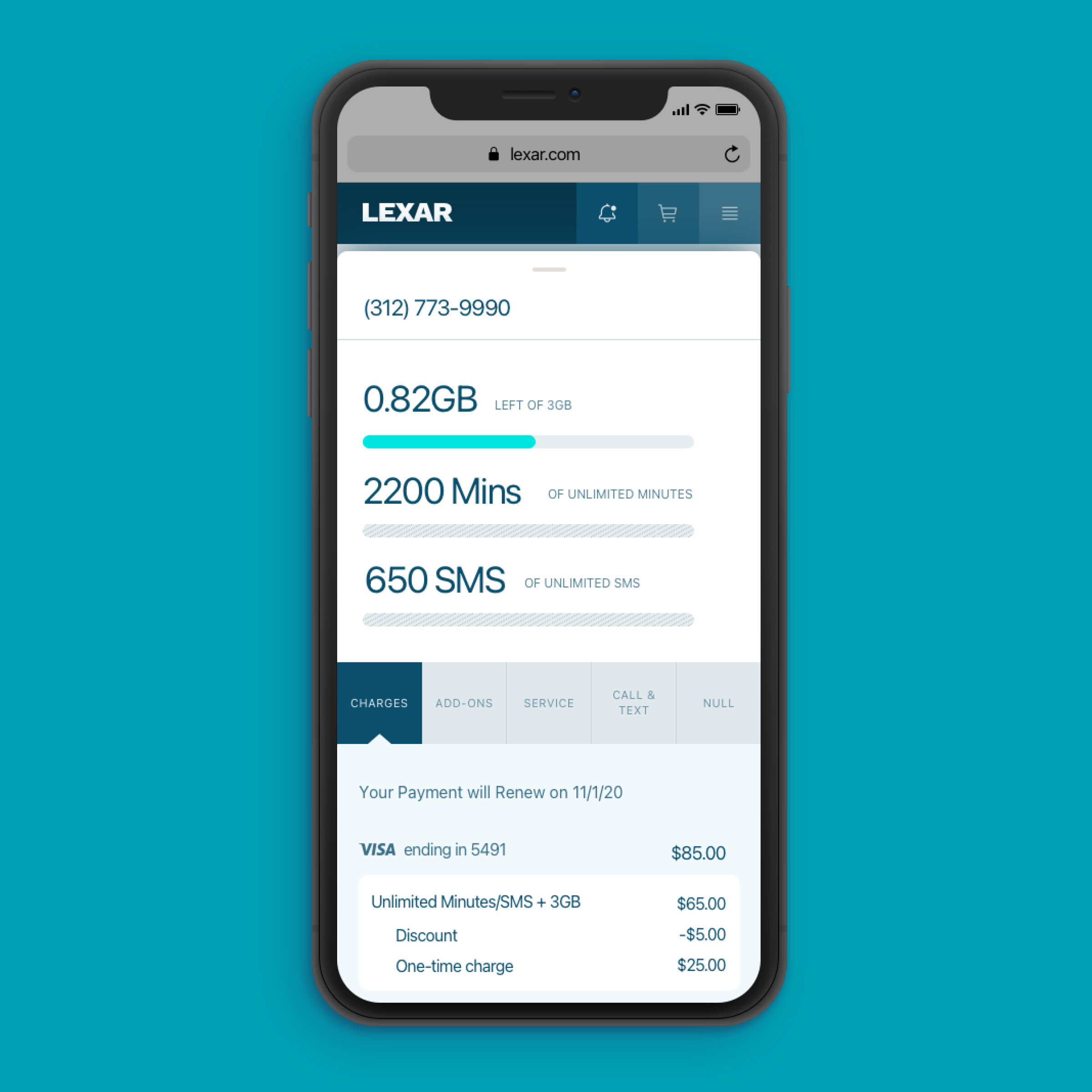
Lexar was CSG’s white-label product solution designed to help clients quickly launch subscription-based digital experiences without building from the ground up. Following an acquisition, our team inherited a design system created by an external agency and adapted it into a scalable framework that could support multiple client implementations.
How I contributed
As a Principle UX Designer, I partnered with product and engineering teams to analyze the product catalog, identify reusable patterns, and translate complex subscription workflows into a flexible experience that allowed clients to apply their own branding while maintaining a consistent, scalable product foundation.
Company
CSG (Ascendon Platform)
Client
Lexar
Role
UX Design Principle
Year
2019-2021
Platform
Enterprise SaaS
Objective
Create a scalable white-label subscription platform by leveraging an inherited design system and CSG’s product catalog to deliver customizable, out-of-the-box experiences that clients could quickly brand and deploy.

Benchmarking
We looked at how users were purchasing phones with wireless providers. Analyzed how the customer would browse the site to compare products and services to determine what was best.
B2C market competitors
Our hypothesis going into the research was that users will need to be aware of the decisions that were just made.
How might we clarify information more effectively?

Device Based Offer (DBO) Flows


API catalog analysis
A critical part of building Lexar was understanding how CSG’s existing APIs could power consistent, scalable customer experiences. We evaluated API capabilities, data structures, and available product attributes against predefined user flows and the new design system to identify opportunities and constraints.
Creating an out-of-the-box solution
By bridging the gap between backend capabilities and front-end experiences, we created a foundation for reusable components, scalable workflows, and configurable solutions that allowed customers to launch and grow their subscription offerings more efficiently.


Defining experience architecture
With a clear understanding of the MVP capabilities, we translated complex product and subscription models into intuitive customer journeys. We defined the information architecture for device purchases and subscription-based offerings, determining how customers would discover, compare, configure, and select products.
This framework helped ensure the experience could scale across different catalogs, business models, and client requirements while providing a consistent foundation for future growth.


Creating clear information heirarchy
Subscription products often require customers to evaluate multiple variables: devices, plans, features, pricing, and add-ons. We explored how to structure and prioritize this information so users could confidently navigate decisions while supporting business goals.
Balancing data and conversion
By testing different content hierarchy and disclosure patterns, we created an experience that reduced cognitive load, surfaced relevant information at the right moment, and strategically incorporated opportunities for upgrades and additional services.

Establishing a foundation
To enable a scalable white-label platform, we worked alongside engineering from the ground up to operationalize the design system and create a shared framework for implementation. We established foundational tokens, layout standards, and reusable UI patterns before moving into detailed page-level design.
Design to development
This approach allowed the team to build with consistency, reduce future design debt, and create a flexible product foundation capable of supporting multiple client experiences.

